
Mouthwash for Sensitive Teeth

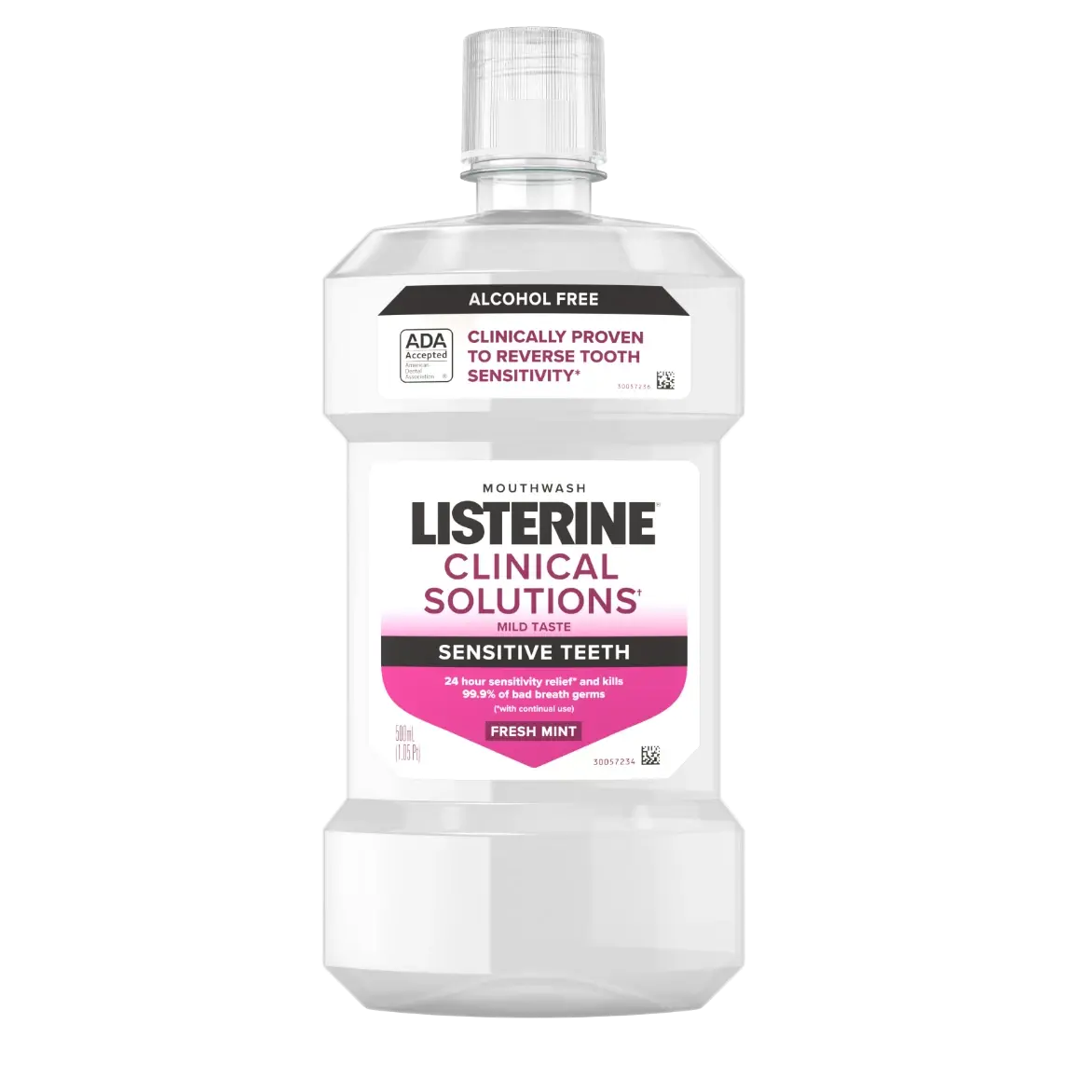
LISTERINE® Clinical Solutions Sensitive Teeth Mouthwash doesn’t just freshen breath. It helps block exposed dentin tubules (the real culprit behind tooth sensitivity) while killing 99.9% of bad breath germs.
Tooth Sensitivity FAQs

Tooth sensitivity happens when enamel or cementum wears down, exposing the dentin layer underneath. That’s when everyday triggers like hot coffee, cold drinks, or sweet treats, can hit those dentin tubules and cause discomfort.

Sensitivity can happen for many reasons: cavities, fractured teeth, worn fillings, gum disease, worn tooth enamel, or an exposed tooth root. All of these can wear down the protective layer of your teeth or lead to gum recession.

When this happens, the softer layer underneath, called dentin, can become exposed. This lets hot, cold, or acidic foods reach the sensitive inner layers and makes teeth more reactive. It’s common and can really disrupt your day.

This mouthwash goes straight to the source: exposed dentin tubules. With continuous use, it helps block those pathways for 24-hour relief from triggers like cold, heat, acids, or sweets, while also eliminating 99.9% of bad breath germs.

Yes, protecting your enamel is key to avoiding tooth sensitivity. Good oral care habits are your best defense:

  • Brush gently twice a day with a soft toothbrush and fluoride toothpaste.

  • Replace your toothbrush every 3-4 months (or sooner if the bristles fray).

  • Clean between your teeth daily with floss or another interdental tool.

  • See your dentist regularly for cleanings and checkups to keep your mouth healthy.

Yes. Whitening treatments can cause a temporary spike in tooth sensitivity because peroxide agents penetrate enamel and irritate the dentin. It’s a normal, short-term side effect recognized by dental professionals.

Don't see your question? Visit our FAQ page.

SEE ALL FAQS